

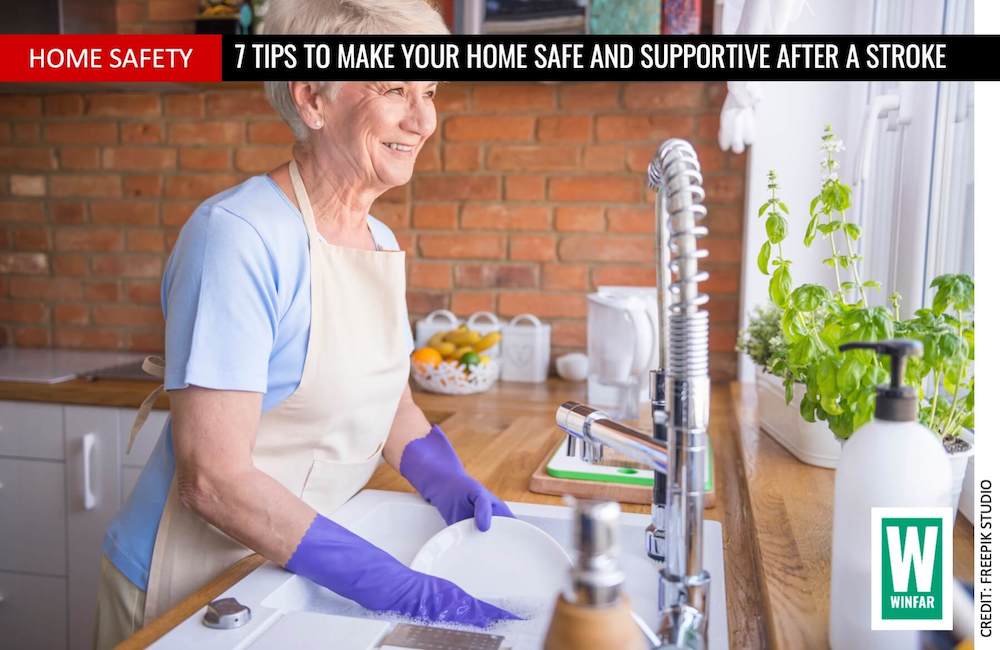

Adjusting to life after a stroke is never easy, but creating a safe and supportive environment can make a world of difference.
The below listed home modifications can help stroke survivors regain independence, reduce fall risks, and feel more confident in their daily routines. Creating a safe and accessible home environment is essential for recovery and independence.
One of the most important home modifications after a stroke is the addition of grab bars. These simple devices provide critical stability, especially in the bathroom where most falls occur.
Bathrooms are high-risk areas for falls. Grab bars provide discreet yet essential support when moving around. Whether installed in the bathroom, shower, hallway, or outdoors, rust-resistant safety rails provide added stability, making daily activities safer for those with limited mobility or balance concerns.
Depending on your loved one’s mobility, you may also want to include other supportive features, such as: non-slip mats, shower chairs and shower seats, raised toilet seats, and handheld showers to make daily routines safer.
For added safety during recovery, using a stable shower seat or chair can help reduce the risk of slipping and make bathing more manageable.
2. Make the Kitchen Accessible
After a stroke, reaching, lifting, and carrying can be challenging. Throw in navigating poor lighting, slippery floors, digging through deep drawers, hot surfaces, and sharp instruments – and the kitchen can rapidly become a frightening space.
So how do you ensure your senior stays independent and safe in their own kitchen?
A few simple re-organizing tricks can make the world of difference:
– Place frequently used items on lower shelves or counters
– Use clear, easy-to-open containers for pantry staples
– Label shelves and drawers to help with memory or cognition issues
– Store lightweight cookware and dishes in accessible places.
Related reading: Is your kitchen safe?
3. Make the Bedrooms and Closet user-friendly
Independence in dressing boosts confidence and dignity. The following simple changes will make that process easier, encouraging independence.
– Removing closet doors to make everything visible
– lower rails where necessary, to facilitate easy access
– Switch to lightweight baskets where possible, instead of heavy drawers
If your loved one needs more support getting dressed, consider adaptive adaptive tools such as dressing sticks, or zipper pulls – or clothing with Velcro closures or magnetic buttons. Adaptive clothing is especially helpful for older adults with limited hand dexterity.
4. Clear Hazards and Reduce Fall Risks
During recovery safety is key. Stroke survivors are vulnerable and more prone to falls. Uneven walking, shuffling, and balance problems make the smallest obstacle in the home more dangerous.
Do a full walkthrough of the home with these safety measures in mind:
– Secure or remove area rugs
– Clear all clutter from hallways and entryways
– Install nightlights in bedrooms, bathrooms, and hallways
– Use furniture with rounded corners and sturdy arms for sitting or rising
– Widen walking paths to accommodate mobility aids like walkers or canes
5. Add Entryway Ramps & Indoor Mobility Solutions
Steps and stairs can be a huge challenge. If your loved one uses a wheelchair or has difficulty with stairs, consider:
– Installing a permanent or portable ramp to access the front door
– Using threshold ramps to smooth uneven transitions between rooms
– Moving essential items (bedroom, bathroom, etc.) to the main floor
6. Evaluate Bed Height and Sleeping Safety
Your loved one’s ability to get in and out of bed is key to their independence and safety.
The bed height should allow them to sit with feet flat on the floor and knees at a 90-degree angle. Even if that means swopping out the frame or raising it on rafters, to facilitate easier access.
Also ensure there’s a clear, well-lit path from the bed to the bathroom, and remove any trip hazards in the area.
7. Consider using Voice-activated technology
Voice-activated technology is relatively easy to set up and can be customized to meet your loved one’s needs and routines. Without to much expense it can make a powerful addition to any post-stroke home environment. These tools allow users to control their environment using simple voice commands, which can be especially helpful for individuals with limited mobility, vision changes, or weakness on one side of the body.
Explore practical bathroom solutions, including shower chairs for elderly users, to improve safety and independence at home.
Stroke survivors can use voice assistants to:-
– Turn lights on and off without having to navigate across the room
– Set medication reminders to help stay on schedule
– Make hands-free phone or video calls to loved ones or caregivers
– Play music, audiobooks, or the news, promoting cognitive stimulation and comfort
– Control thermostats, TVs, or appliances with compatible smart devices
To read the full original article: https://www.assistinghands-il-wi.com