


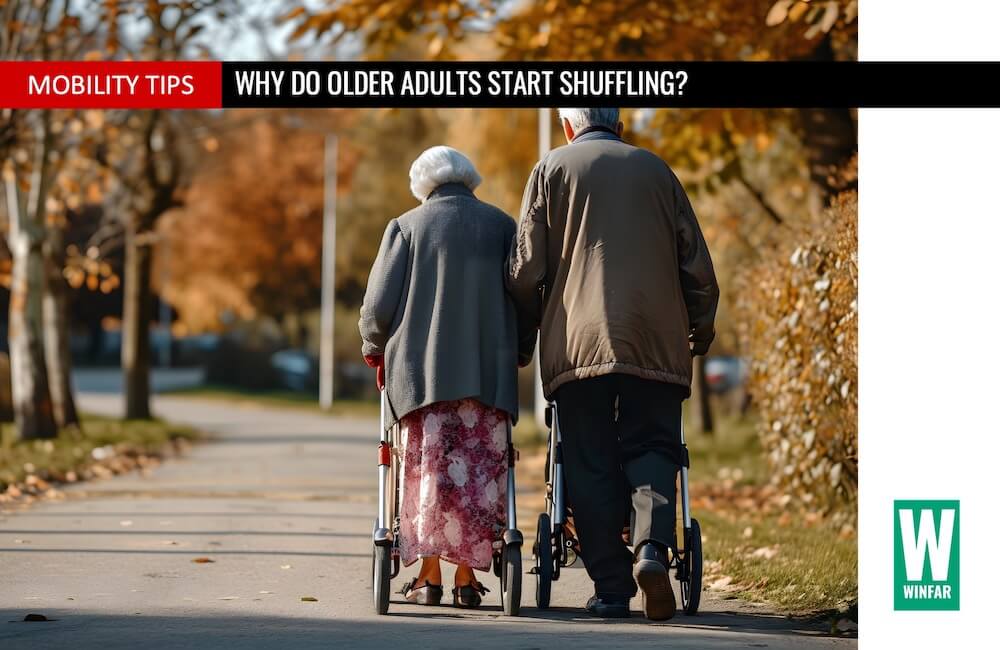

You may have noticed it … A slower step. A slight shuffle when walking.
Even when you point it out, it continues — and often, it’s not because they don’t want to. In many cases, they may not even realise they are doing it.
A shuffling walk is not intentional. but it is usually a sign that something has changed — physically, neurologically, or even emotionally.
That’s why it’s important not to ignore it.
Why Do Older Adults Start Shuffling?
As we age, the way we move naturally changes. Strength, balance, and coordination all play a role in how we walk — and when one of these is affected, it can show up as a shuffle.
Why it Matters More Than You Think?
At first glance, a shuffling walk may seem minor. But over time, it can have a significant impact. When feet don’t lift properly:
- They’re more likely to catch on rugs, thresholds, or uneven surfaces
- Balance becomes narrower and less stable
- The risk of falling increases significantly
Shuffling also places extra strain on certain muscles, which can lead to fatigue, discomfort, and further mobility decline.
In short — it doesn’t just affect how someone walks.
It affects their confidence, safety, and independence.
Common Causes ?
Some of the more common causes include:
1. Loss of strength
Reduced mobility over time can weaken the hips and leg muscles, making it harder to lift the feet properly.
2. Changes in balance and posture
Many older adults unconsciously shorten their steps or shuffle as a way to feel more stable and avoid falling.
3. Joint stiffness or pain
Conditions like arthritis can make normal stepping uncomfortable — so shuffling becomes a way to compensate.
4. Neurological conditions
Conditions such as Parkinson’s disease or peripheral neuropathy can affect coordination and movement patterns.
5. Vision changes
If it’s harder to see clearly, especially where the foot is landing, a person may walk more cautiously.
6. Fear of falling
After a stumble or fall, it’s common to become more hesitant — leading to smaller, dragging steps.
7. Medication side effects
Some medications can affect balance, coordination, or muscle control.
8. Footwear and environment
Worn-out shoes, loose slippers, or slippery floors can all contribute to poor walking patterns.
What Should You Do?
The most important step is simple: don’t ignore it.
A change in walking pattern is often a sign that something needs attention — and identifying the cause early can make a big difference.
Start by observing:
– When did it start?
– Has anything else changed recently – in health, environment or medication?
– Are there obvious factors like footwear or slippery floors contributing to the problem?
If the cause isn’t clear, it’s important to speak to a healthcare professional. A proper assessment can help identify the underlying issue and guide the next steps.
What Should You Do?
Depending on the cause, solutions may be simple:
– Improving footwear
– Making small home safety adjustments
– Introducing supportive mobility aids. Visit www.winfar.co.za to learn more.
– Strengthening muscles through guided movement
Often, it’s not about one big change — but a series of small, thoughtful adjustments that help restore confidence and stability.
What Should You Do?
A shuffling walk is easy to overlook — but it’s often the body’s way of asking for support.
The sooner you pay attention, the easier it is to address.
And with the right support, many older adults can continue moving safely, confidently, and independently.